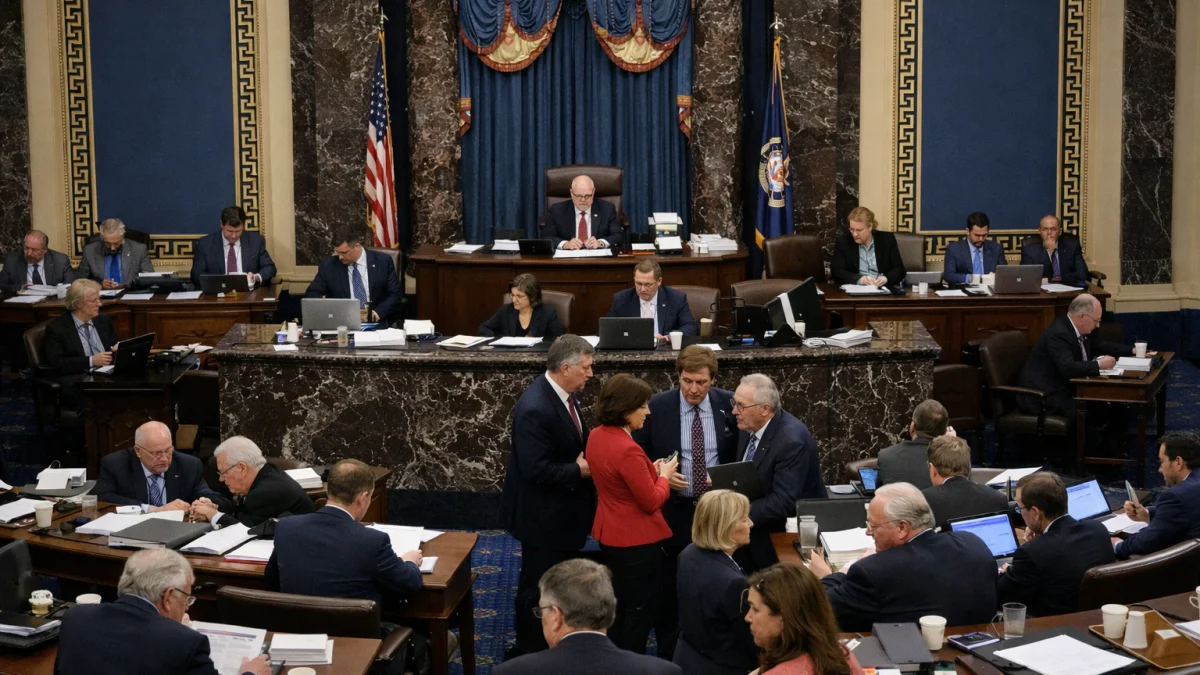
WASHINGTON—The U.S. Senate worked through the night into Friday as lawmakers sought to advance a series of major spending measures ahead of looming fiscal deadlines, with negotiations continuing over appropriations bills that have exposed divisions over defense funding, domestic spending and election-related policy provisions.
Senate leaders remained engaged in talks after extended floor proceedings, reflecting pressure on Congress to make progress on annual government funding legislation before the next funding deadline. Lawmakers from both parties have said they want to avoid a government shutdown, although disagreements over spending priorities and policy riders have complicated negotiations.
The overnight work followed action in the House earlier this week on a Republican-backed spending package that would provide additional funding for defense, intelligence and agriculture while also including grants tied to election administration measures. The proposal has drawn opposition from Senate Democrats, who have objected to the inclusion of election-related provisions and called for bipartisan appropriations bills without what they describe as unrelated policy measures.
Republican lawmakers have argued that increased defense spending and other priorities should move forward promptly, while some have defended attaching additional policy initiatives to spending legislation. Senate Republicans have also indicated that support for several House provisions is uncertain, highlighting differences between the two chambers even within the party.
Appropriations leaders from both parties have continued to emphasize the importance of completing government funding bills through the regular legislative process. However, congressional officials have acknowledged that the schedule has become increasingly compressed, raising the possibility that lawmakers could ultimately need temporary funding legislation if final appropriations measures are not completed in time.
Congress has faced repeated challenges in completing annual appropriations bills on schedule in recent years, often relying on short-term funding measures while negotiations continue. The Senate's extended session underscored the urgency surrounding this year's spending debate as lawmakers sought to narrow differences before the next legislative deadlines.
As of Friday, no final agreement on the full package of spending measures had been announced. Senate leaders said discussions would continue as lawmakers worked to resolve outstanding issues and determine the next steps for the legislation.