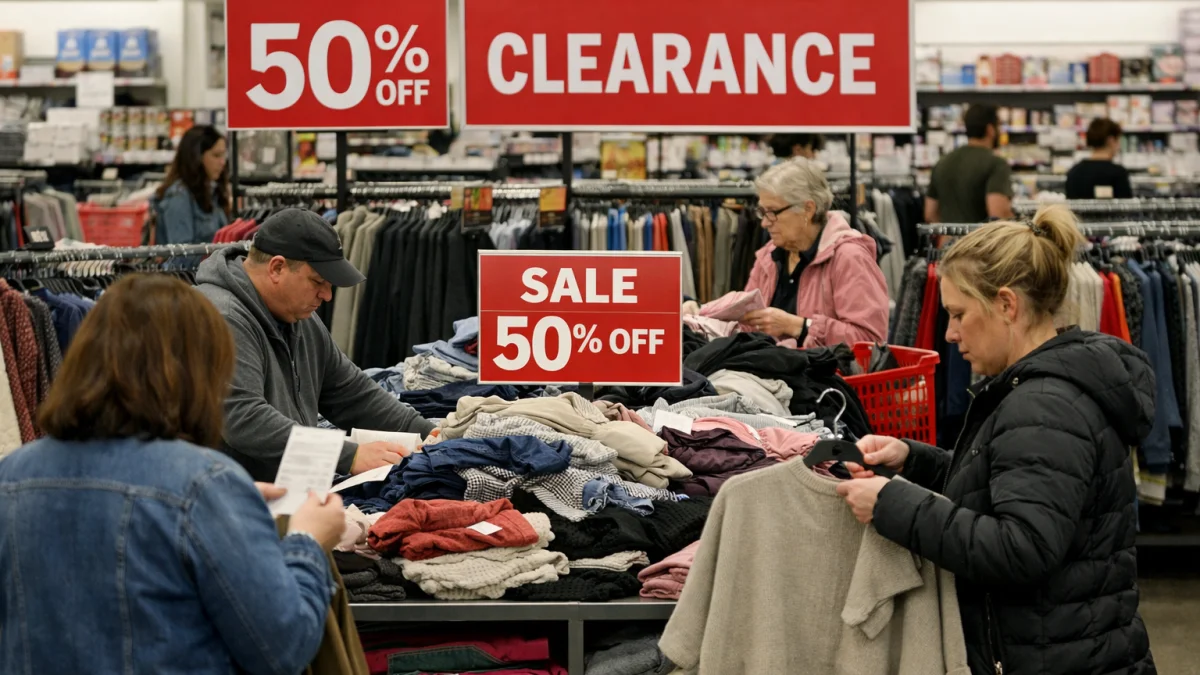
NEW YORK — Retailers are relying more heavily on discounts, loyalty incentives and value-focused promotions as consumers trim discretionary spending and prioritize essential purchases amid continued pressure on household budgets, according to company executives, analysts and recent earnings reports.
Major retailers across the United States have reported that shoppers remain willing to spend but are becoming increasingly selective, favoring lower-priced merchandise, private-label products and promotional offers while delaying purchases of apparel, home goods and other non-essential items.
Executives at discount chains said the shift has broadened their customer base beyond lower-income households. Dollar General told investors that more higher-income shoppers are visiting its stores, while TJX, the parent company of TJ Maxx and Marshalls, raised its annual sales and profit outlook after stronger-than-expected demand from consumers seeking bargains.
Industry analysts said retailers are responding with more aggressive promotions to maintain customer traffic and reduce inventory, particularly in discretionary categories. Some apparel brands have introduced sales earlier than usual, while broader retail events have become increasingly competitive as chains seek to capture consumer spending.
Recent consumer behavior suggests households are carefully managing budgets by comparing prices, purchasing in bulk when discounts are available and reducing impulse purchases. Grocery shoppers are also placing greater emphasis on essential items while cutting back on snacks and premium products, according to retail surveys and industry research.
Retail executives have linked the trend to higher living costs, including increased fuel prices and persistent inflation, which have squeezed disposable income despite continued employment growth. Analysts said spending has not collapsed but has shifted toward value-oriented retailers, warehouse clubs and discount chains.
The promotional environment has intensified competition among retailers, although some analysts warn that frequent discounts may become less effective if consumers grow accustomed to waiting for sales. Research published this week found many shoppers believe there are now too many overlapping promotional events, potentially reducing their impact on purchasing decisions.
Retailers are closely monitoring consumer demand as they prepare for the back-to-school shopping season, traditionally one of the industry's busiest periods before the year-end holidays. Analysts said spending patterns during the coming months will provide a clearer indication of whether households continue to absorb higher living costs or further reduce discretionary purchases.