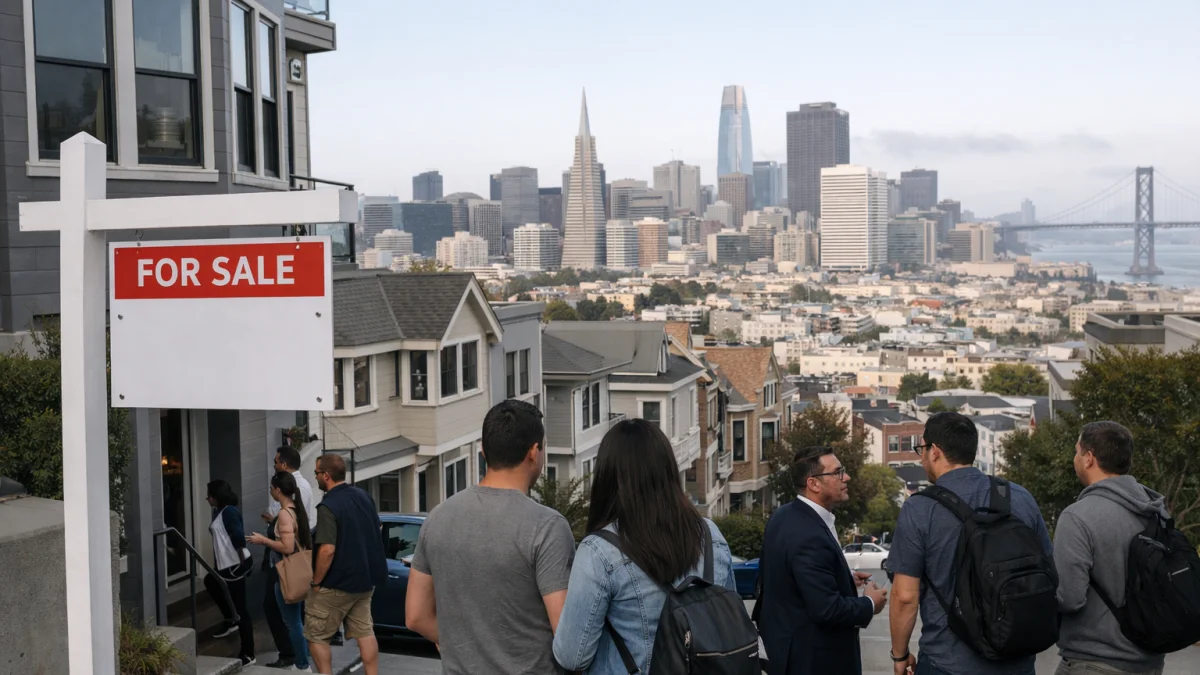
SAN FRANCISCO — Home prices in San Francisco have climbed to record levels in 2026 as renewed demand from highly paid technology workers, particularly those tied to the artificial intelligence sector, collides with a limited supply of homes, intensifying affordability pressures across the city.
Real estate brokerage Redfin reported earlier this year that the median home sale price in the San Francisco metropolitan area reached a record high in March, rising more than 14% from a year earlier and making the region once again the most expensive major U.S. housing market. Other brokerages and market analysts have since reported further gains in single-family home prices through the second quarter of the year.
Housing analysts attribute much of the recent momentum to an influx of wealth generated by the AI industry, with employees of companies including OpenAI and Anthropic entering the housing market following secondary stock sales and in anticipation of future public offerings. The surge has intensified competition for a relatively small number of available homes, particularly in affluent neighborhoods close to major technology employers.
The competitive environment has produced unusually aggressive bidding. According to local market data, dozens of homes have sold for more than $1 million above their asking prices during the first half of 2026, a sharp increase from the same period a year earlier. Market participants cited constrained inventory and strong demand from high-income buyers as key drivers of the trend.
Economists and housing researchers said the city's longstanding shortage of new housing has amplified the impact of rising demand. While luxury properties have recorded some of the largest price gains, broader affordability challenges have persisted for middle-income residents and first-time buyers, who continue to face elevated borrowing costs alongside rising purchase prices.
The renewed strength in San Francisco's housing market follows several years of uneven performance after the pandemic, when remote work and higher interest rates cooled activity. Analysts said the current rebound has been more concentrated than previous housing cycles, with AI-related wealth playing a larger role than conventional economic drivers.
Industry observers said market conditions will depend largely on whether housing inventory improves in the coming months and on the pace of hiring and liquidity events within the technology sector. For now, brokers continue to report strong demand for desirable properties, while affordability remains a central concern for many residents amid the city's record home prices.