NEW YORK—New York City health officials continued an intensive response to a cluster of Legionnaires’ disease on Manhattan’s Upper East Side on Monday, expanding public outreach and requiring remediation of cooling towers that tested positive for Legionella bacteria as investigators worked to identify the source of the outbreak.
The New York City Department of Health and Mental Hygiene said the community cluster, centered in the Carnegie Hill and Yorkville neighborhoods and including ZIP codes 10028, 10128 and 10075, has grown steadily since it was first identified in early July. As of the latest official update, 46 people had been diagnosed with Legionnaires’ disease in connection with the cluster. Twenty-two remained hospitalized, 19 had been discharged to recover at home, and five people had not required hospitalization. Officials said no deaths had been reported.
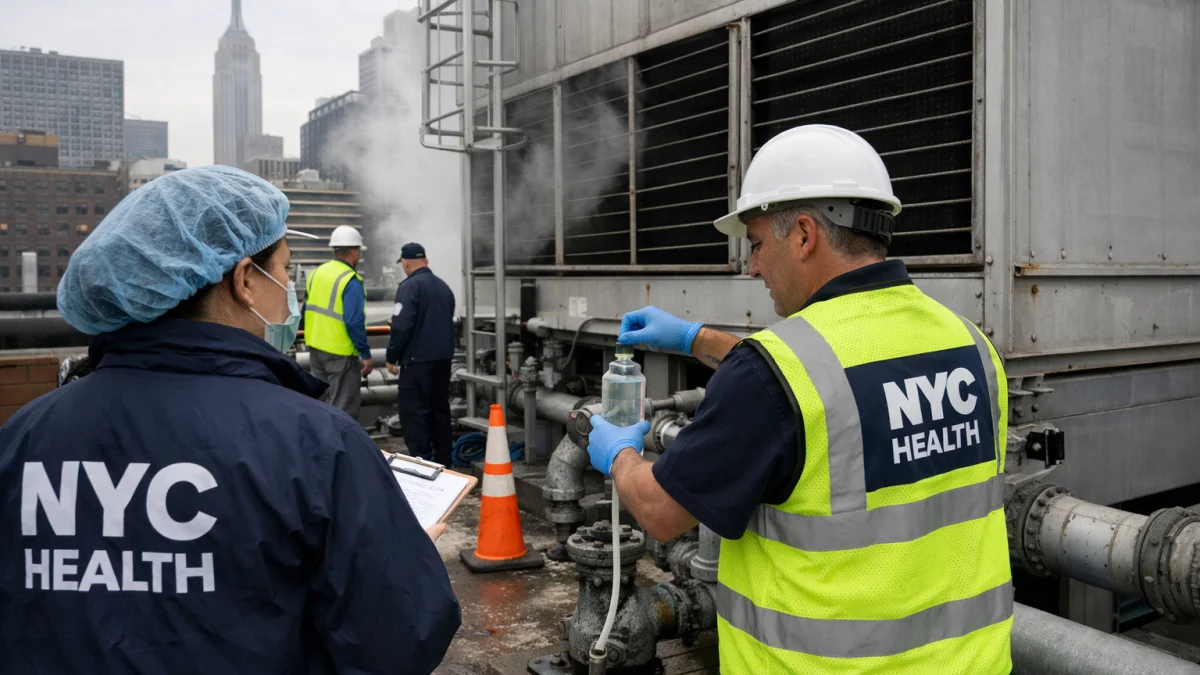
The department has tested cooling towers throughout the affected area because previous community outbreaks have been linked to contaminated water mist released from such systems. Authorities said 31 buildings received preliminary positive polymerase chain reaction (PCR) screening results for Legionella bacteria and were ordered to immediately clean and disinfect their cooling towers.
Health officials stressed that a positive PCR result does not confirm that a building is the source of the outbreak because the test cannot distinguish between live and dead bacteria. Culture testing, which takes about two weeks, is continuing to determine whether viable Legionella is present and whether any environmental samples match bacteria isolated from patients.
City officials said 19 of the affected buildings had completed remediation, while the remaining properties were expected to finish cleaning under health department orders. They emphasized that it remains safe to drink tap water, shower and use air conditioners in the affected neighborhoods because the disease is not spread through drinking water, household plumbing or person-to-person contact.
Health Commissioner Dr. Alister Martin urged anyone who lives, works or has visited the affected area since late June and develops symptoms including fever, cough or difficulty breathing to seek medical care promptly. Legionnaires’ disease is a severe form of pneumonia caused by inhaling water droplets contaminated with Legionella bacteria and is generally treatable with antibiotics when diagnosed early.
The department has also alerted healthcare providers to maintain a high level of suspicion for Legionnaires’ disease among patients with pneumonia and to conduct appropriate diagnostic testing.
Investigators said environmental sampling, laboratory analysis and epidemiological work will continue until the source of the cluster is identified or the outbreak is declared over.