U.S. military operations linked to the expanding Middle East conflict have intensified a long-running domestic debate over the constitutional limits of presidential war powers, congressional oversight, and the political costs of sustained overseas military engagement. As the administration has expanded strikes against Iranian military targets following attacks that killed U.S. service members, lawmakers from both parties have renewed scrutiny of the legal basis, strategic objectives, and duration of the campaign.
The debate extends beyond the immediate military response. It reflects broader questions about how the United States should balance deterrence against regional adversaries with the constitutional role of Congress in authorizing the use of force. The renewed controversy comes after years in which successive administrations have relied on executive authority for limited military operations, often arguing that the president possesses sufficient constitutional powers to protect U.S. personnel and national interests without obtaining new congressional authorization.
The latest military actions have accelerated congressional efforts to reassert legislative authority. Several lawmakers have introduced or revived resolutions under the War Powers Resolution of 1973, arguing that any prolonged military campaign requires explicit approval from Congress. Senator Adam Schiff, for example, has argued that renewed operations against Iran do not automatically provide a fresh legal basis for extended military action without congressional authorization. Administration officials, by contrast, have maintained that the president acted within constitutional authority to respond to attacks on American forces and to protect national security interests.
The constitutional dispute is not new. The War Powers Resolution was enacted after the Vietnam War to limit unilateral presidential military action by requiring notification to Congress within 48 hours of introducing U.S. forces into hostilities and generally requiring congressional authorization for operations extending beyond 60 days. However, legal scholars note that presidents from both political parties have frequently interpreted their commander-in-chief authority broadly, resulting in recurring disputes rather than definitive judicial resolution. Courts have generally avoided settling these constitutional questions, leaving Congress and the executive branch to negotiate their respective roles through legislation and political pressure.
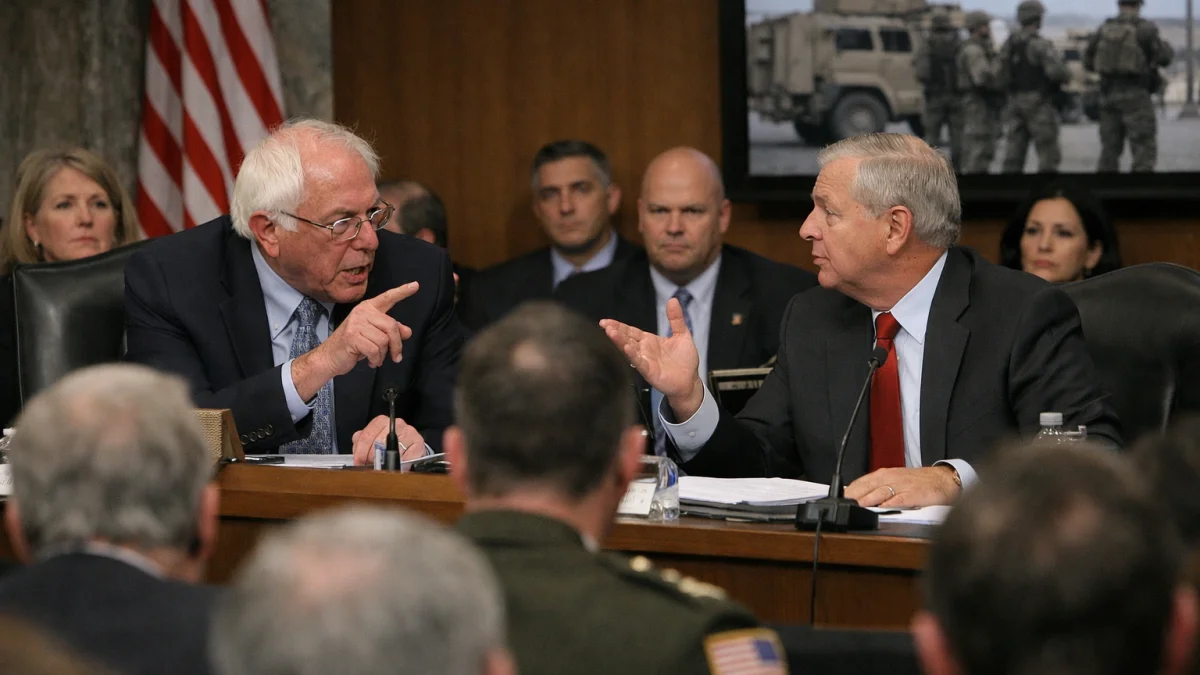
The current debate also illustrates how foreign policy increasingly intersects with domestic political dynamics. Supporters of the administration argue that military retaliation is necessary to deter further attacks on U.S. personnel, reassure regional allies, and preserve freedom of navigation through strategic waterways. Critics contend that expanding military operations without clearly defined objectives risks deeper U.S. involvement in another prolonged Middle East conflict while bypassing Congress's constitutional responsibilities. Those competing assessments have become central themes in congressional hearings, legislative proposals, and broader political messaging.
Political divisions do not fall neatly along party lines. Although most Republicans have supported the administration's response, some conservative lawmakers have questioned whether continued operations should receive explicit congressional approval. Most Democrats have emphasized the need for legislative oversight while expressing concern about the strategic and economic consequences of an open-ended conflict. Such cross-party disagreement reflects a broader evolution in U.S. foreign policy debates since the wars in Iraq and Afghanistan, where skepticism toward prolonged military engagements has become more widespread across the political spectrum.
Economic considerations have reinforced the domestic discussion. Military escalation in the Middle East has renewed concerns about global energy markets, commercial shipping through the Strait of Hormuz, and inflationary pressures that could affect U.S. consumers. Analysts note that disruptions to energy supplies or maritime trade could increase fuel costs and complicate broader economic policy objectives. Those concerns have given lawmakers additional incentives to seek greater clarity regarding both the military strategy and its anticipated duration.
The administration has argued that its military actions remain focused on degrading Iranian military capabilities and protecting American forces rather than pursuing a broader war. At the same time, regional instability and repeated exchanges between U.S. and Iranian forces have complicated efforts to define clear limits on the scope of the operation. Security specialists caution that even limited military campaigns can expand if retaliatory attacks continue or regional partners become further involved, increasing pressure on policymakers to establish measurable objectives and exit conditions.
Public opinion may become an increasingly important factor if military operations continue. Historically, American support for overseas military action has tended to be strongest immediately following attacks on U.S. personnel but has often declined when conflicts become prolonged, casualties increase, or strategic goals appear uncertain. While polling continues to evolve, political strategists from both major parties are closely monitoring whether the conflict influences broader voter priorities ahead of future legislative and national elections. Historical experience suggests that sustained foreign military engagements frequently become domestic political issues extending well beyond national security policy alone.
For now, the confirmed picture is one of simultaneous military escalation abroad and constitutional debate at home. U.S. forces continue operations in response to attacks on American personnel, while Congress considers additional measures intended to clarify or limit executive authority. Officials, lawmakers, and legal experts remain focused on the evolving security situation, the application of the War Powers framework, and whether future developments alter either the military campaign or the political consensus surrounding U.S. involvement in the Middle East.