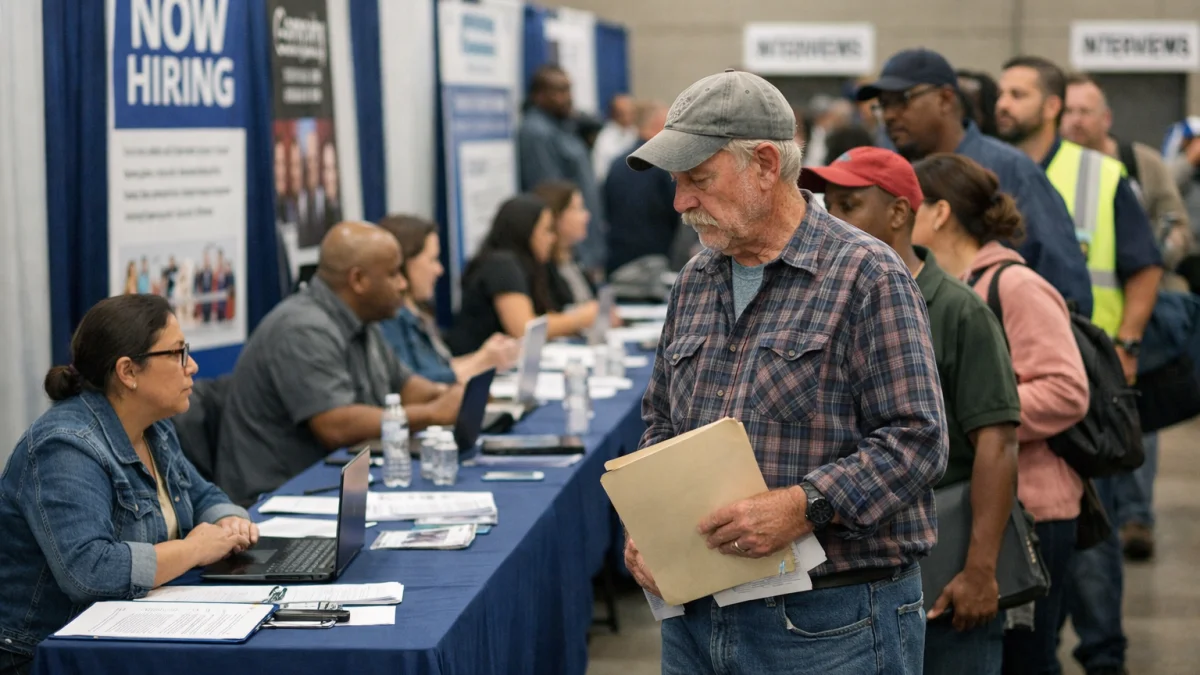
WASHINGTON — The U.S. unemployment rate fell to 4.2% in June even as job growth slowed sharply and labor force participation dropped to its lowest level in more than five years, underscoring signs of a cooling labor market beneath an apparently stronger headline figure.
The Labor Department's Bureau of Labor Statistics said nonfarm payrolls increased by 57,000 jobs in June, well below economists' expectations of about 110,000. Payroll gains for April and May were also revised down by a combined 74,000 jobs.
The unemployment rate declined from 4.3% in May to 4.2%, but the improvement largely reflected a sharp contraction in the labor force rather than stronger hiring. About 720,000 people left the labor force during the month, pushing the labor force participation rate down to 61.5%, its lowest level since March 2021, according to the Bureau of Labor Statistics.
Economists said the report pointed to continued softening in labor market conditions despite the lower unemployment rate. The decline in participation meant fewer people were counted as actively seeking work, reducing the unemployment rate even as hiring weakened.
Employment gains were concentrated in healthcare, professional and business services, and construction, while leisure and hospitality posted the largest decline, shedding about 61,000 jobs. Average hourly earnings increased 0.3% from the previous month and were up 3.5% from a year earlier, indicating wage growth remained moderate.
The weaker-than-expected employment report prompted investors to scale back expectations that the Federal Reserve would raise interest rates in the near term. Financial markets interpreted the slowing pace of hiring as evidence that labor demand is easing, even though layoffs remain relatively subdued by historical standards.
Analysts cautioned that a single monthly employment report does not establish a trend but said the combination of slower payroll growth, downward revisions to prior months, and falling labor force participation warranted close attention in coming months. Some also noted that seasonal factors and broader economic uncertainty could have influenced participation during June.
The June employment figures were released one day earlier than usual because of the U.S. Independence Day holiday. The Bureau of Labor Statistics is scheduled to publish its next monthly employment report in early August, providing a fresh indication of whether the labor market slowdown persists.