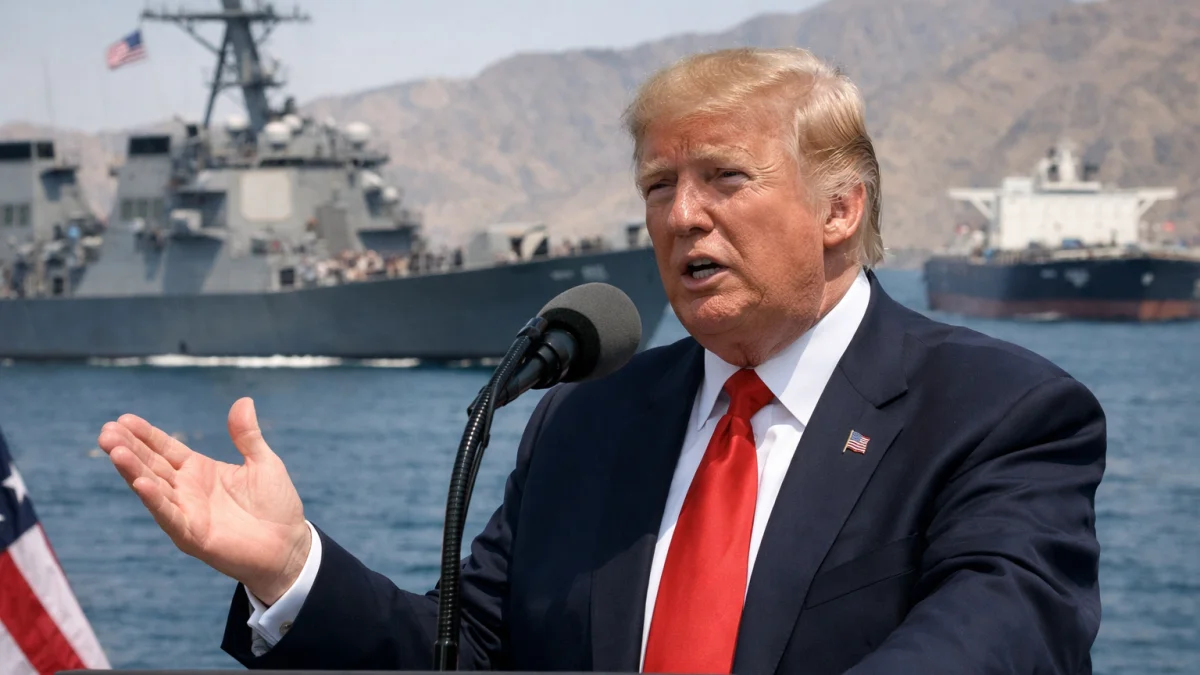
WASHINGTON — President Donald Trump said on Monday the United States would likely take control of security operations in the Strait of Hormuz and should be reimbursed by other countries for safeguarding one of the world's most important maritime trade routes, as fighting with Iran continued to raise concerns over global energy supplies.
Speaking in a telephone interview with Fox News' "Fox & Friends," Trump said the United States would "keep the strait" and "probably run it," adding that Washington would become the "guardian of the strait" and deserved compensation for maintaining security in the strategic waterway.
"We're going to keep the strait, and we'll probably run it. We'll become the guardian of the strait. Maybe we'll call it the guardian angel of the strait. And we should be reimbursed for that," Trump said.
Later on Monday, Trump said in a Truth Social post that the United States would reinstate a blockade targeting Iranian ships and customers while allowing other countries to continue using the Strait of Hormuz. He said the United States should be reimbursed "at the rate of 20% on all cargo shipped" to cover the costs of providing security in the area.
The Strait of Hormuz, located between Iran and Oman, carries a substantial share of global oil and liquefied natural gas shipments. Renewed military exchanges between U.S. and Iranian forces have heightened concerns over shipping through the narrow waterway and contributed to higher oil prices and increased market volatility.
Trump said wealthy countries benefiting from secure passage through the strait should contribute financially to its protection, arguing that the United States should no longer bear the costs alone. He did not identify which countries he expected to reimburse Washington or explain how such payments would be implemented.
Iran has maintained that it has authority over access to the strait and has rejected U.S. efforts to assert control over the waterway. The latest exchange of statements came after renewed military strikes and amid growing uncertainty over diplomatic efforts aimed at reducing tensions between Washington and Tehran.
No international agreement establishing the reimbursement mechanism proposed by Trump had been announced as of Monday, and U.S. officials had not released additional details on how the administration intended to implement the proposal.