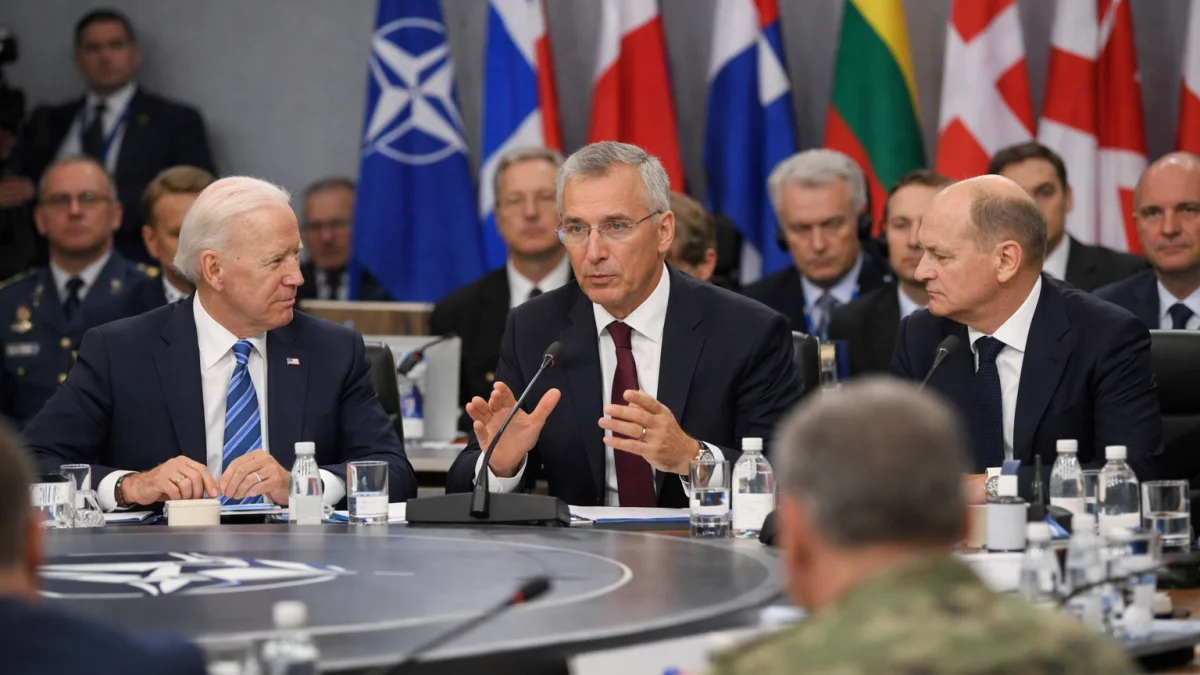
Disputes over defense spending are set to dominate NATO's summit in Ankara this week, reflecting a broader shift in the alliance's strategic priorities as members seek to reconcile continued support for Ukraine with growing pressure for Europe to assume a larger share of its own defense. While allied governments broadly agree that Russia remains the principal long-term security challenge, disagreements over how rapidly countries should increase military spending have become central to discussions about NATO's future role and cohesion.
The debate matters because it extends beyond budget targets. NATO's leadership increasingly frames higher defense expenditure as essential to sustaining deterrence against Russia, rebuilding Europe's defense industrial base, and maintaining military assistance to Ukraine while the United States reassesses its long-term force posture on the continent. Officials argue that the alliance is moving from an era focused primarily on burden-sharing toward one emphasizing greater European responsibility for conventional defense capabilities.
The summit follows commitments made at last year's Hague meeting, where allies endorsed a long-term objective of spending the equivalent of 5% of gross domestic product on defense and related security investments by 2035, including 3.5% for core defense budgets and 1.5% for supporting infrastructure and resilience. NATO Secretary General Mark Rutte has called on governments to arrive in Ankara with "clear, concrete and credible plans" demonstrating how those commitments will be implemented rather than reaffirmed in principle.
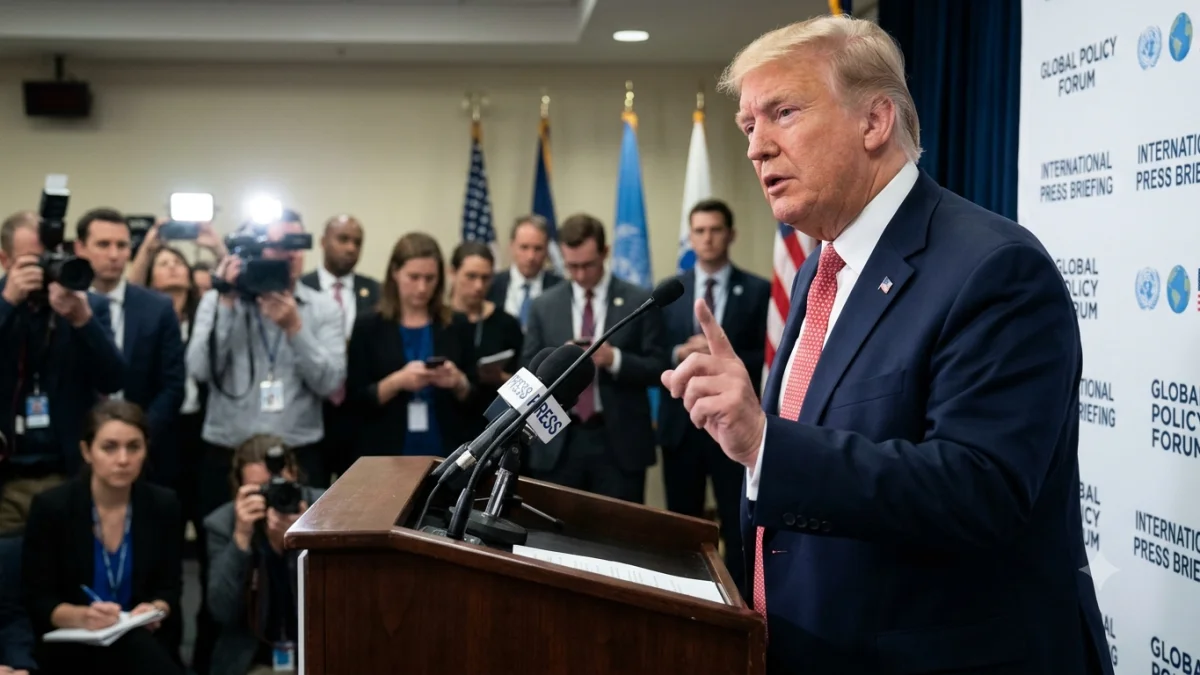
Those expectations coincide with renewed pressure from U.S. President Donald Trump's administration. Washington has continued urging European allies to assume greater responsibility for the continent's security while conducting a review of the U.S. military presence in Europe. NATO officials have sought to reassure members that the alliance remains committed to collective defense under Article 5, but discussions increasingly acknowledge that European governments may need to provide a larger share of conventional military capabilities regardless of future U.S. deployments.
Not all allies are positioned equally to meet the new spending objectives. Some eastern and northern European members, particularly those geographically closer to Russia, have expanded military budgets rapidly since Russia's full-scale invasion of Ukraine in 2022. Others continue to face domestic political and fiscal constraints that complicate efforts to accelerate defense investment, even as they endorse NATO's strategic objectives. Public debate in countries including the United Kingdom illustrates the challenge of balancing increased military expenditure with broader budgetary pressures.
These differences have direct implications for Ukraine. Ukrainian President Volodymyr Zelenskyy is expected to participate in summit discussions as NATO members review military assistance, training programs and longer-term defense cooperation. According to alliance officials, European governments are expected to reaffirm substantial military support for Ukraine during 2026, even as the United States places greater emphasis on Europe's leadership in sustaining assistance. The emphasis reflects an effort to demonstrate continuity in support despite evolving transatlantic burden-sharing arrangements.
The summit also highlights a growing emphasis on defense industrial capacity. NATO officials have indicated that governments and industry representatives will announce major procurement initiatives intended to expand production of weapons, ammunition and other military equipment. The objective is to address lessons from the Ukraine war, where sustained high-intensity combat exposed limitations in existing production capacity across much of Europe and North America. Officials increasingly argue that military spending targets must translate into deployable capabilities rather than remain accounting benchmarks.
Analysts note that this marks a broader evolution in NATO's strategic agenda. Since Russia's invasion of Ukraine, the alliance has expanded its forward military presence, strengthened regional defense planning and encouraged greater interoperability among member states. Current discussions suggest another phase in that evolution, with greater emphasis on European force generation, industrial resilience and long-term sustainability alongside continued U.S. strategic support. While experts differ over the pace and scope of that transition, many agree that the debate now concerns implementation rather than whether Europe should assume greater defense responsibilities.
The summit also unfolds against a wider geopolitical backdrop that includes instability in the Middle East and continued uncertainty over U.S. strategic priorities. NATO officials have sought to keep attention focused on the alliance's core mission of collective defense while acknowledging that broader international developments could influence political discussions among leaders. Maintaining unity despite differing national priorities remains a recurring challenge for an alliance that has expanded to 32 members with varying security perceptions and fiscal capacities.
As leaders gather in Ankara, the central question is no longer whether NATO members support strengthening the alliance, but how quickly they can convert political commitments into measurable military capabilities. Officials will be monitoring whether governments present credible implementation plans for higher defense spending, whether new industrial agreements materialize as expected, and how allies define Europe's future role in sustaining support for Ukraine while preserving transatlantic cohesion. Those outcomes will shape the alliance's strategic direction beyond the summit, even as the broader security environment continues to evolve.