Maine Democrats are racing to replace their U.S. Senate nominee after Graham Platner agreed to withdraw from the race following a sexual assault allegation that he denies, creating an unexpected test of the party's ability to contain political damage in one of the most closely watched Senate contests of the 2026 election cycle. State election law gives Democrats only a narrow window to formally select a new nominee, compressing what would normally be a months-long campaign into a matter of weeks.
The development matters well beyond Maine because the contest against Republican incumbent Sen. Susan Collins is widely viewed as one of the races that could influence control of the U.S. Senate. Democrats had regarded the seat as competitive after Platner's unexpectedly strong primary performance energized progressive voters. His abrupt departure, however, has shifted attention from campaign messaging to organizational competence, candidate vetting and party unity.
Platner's withdrawal followed allegations by a former partner that he sexually assaulted her in 2021. He has denied the accusation and has said leaving the race should not be interpreted as an admission of wrongdoing. Nonetheless, the allegation triggered a rapid collapse in political support as prominent Democratic allies withdrew endorsements and party leaders urged him to step aside, concluding that the controversy threatened the party's prospects in November regardless of the legal status of the claims.
The episode also highlights the increasingly limited tolerance among both national and state party organizations for prolonged candidate crises during competitive federal campaigns. While parties have previously attempted to weather scandals involving nominees, the compressed election calendar and the strategic importance of Senate control have increased pressure for rapid decisions. In Maine, party officials moved quickly to establish a replacement process rather than waiting for the controversy to evolve over a longer period.
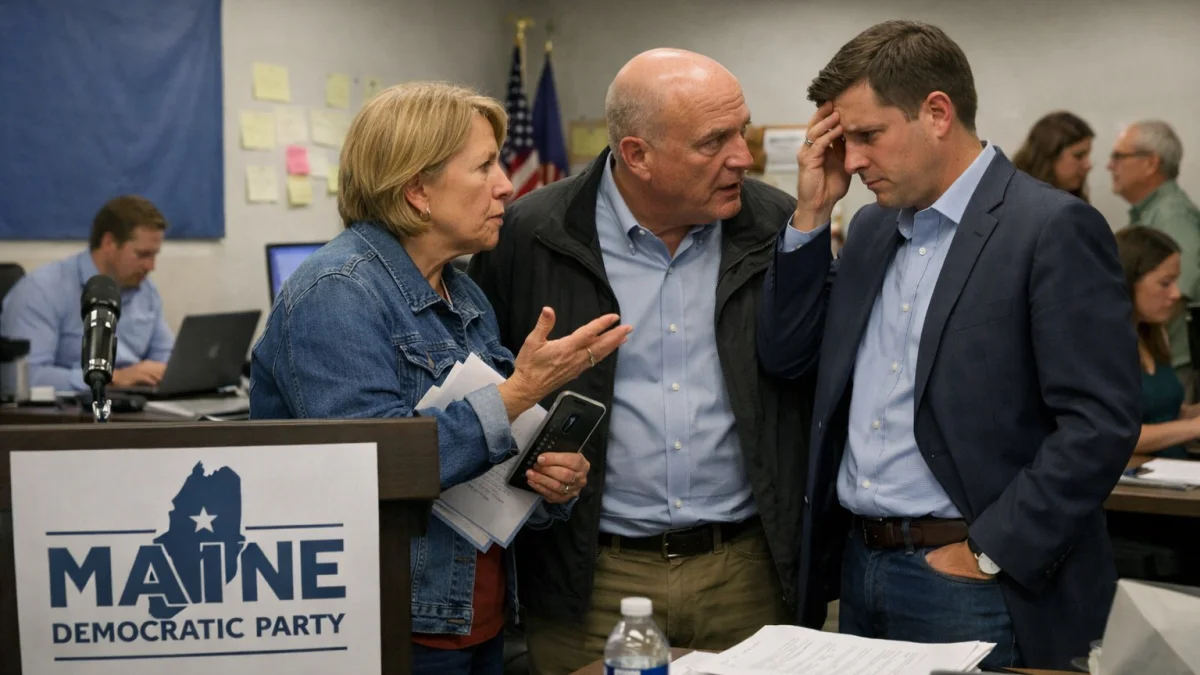
That process has itself become a significant political story. Maine Democratic leaders have insisted that Platner and his campaign will have no role in determining either the replacement procedure or the eventual nominee. Party Executive Director Devon Murphy-Anderson said officials were working to create a transparent process while rejecting what the party characterized as attempts by Platner's campaign to influence succession planning. Platner's campaign disputed suggestions that it sought to shape the outcome, saying it was seeking clarity about the process.
The disagreement reflects broader tensions within the Democratic coalition. Platner built his campaign around a progressive grassroots movement that attracted volunteers and supporters outside the party establishment. His exit has reopened debates over whether the replacement should preserve that political momentum or pivot toward a candidate viewed as more broadly electable against Collins. Those competing priorities are now unfolding simultaneously under severe time constraints.
Several prominent Democrats have emerged as potential successors, including Secretary of State Shenna Bellows, former state Senate President Troy Jackson and former Maine Center for Disease Control and Prevention Director Nirav Shah, alongside several other current and former public officials and political figures. Each brings different strengths, whether statewide name recognition, executive experience or ties to progressive activists, but any eventual nominee will face the challenge of assembling a statewide campaign with substantially less preparation time than a conventional nominee would enjoy.
For Republicans, the turmoil offers an opportunity to reinforce Collins' longstanding electoral advantages. Collins has repeatedly demonstrated an ability to attract crossover support despite Maine's increasingly competitive political environment. A Democratic nominee entering the race late must not only rebuild fundraising and campaign infrastructure but also redirect public attention away from the circumstances surrounding Platner's withdrawal. Whether that proves achievable will depend partly on how quickly Democrats unify after selecting a replacement.
The episode also underscores the importance of candidate vetting in modern campaigns. Rapidly rising political figures can generate significant enthusiasm, particularly in competitive primaries, but allegations emerging after a nomination can leave parties with limited institutional options. Maine's statutory deadlines mean the Democratic Party must balance transparency, internal legitimacy and electoral urgency while complying with election law governing ballot access and nominee replacement.
For now, the confirmed situation remains fluid but clearly defined. Platner has indicated he will withdraw while continuing to deny the allegations against him, and Maine Democrats are preparing a nominating convention to choose a replacement before the statutory deadline. Officials are focused on finalizing the selection process and unifying behind a new candidate, while observers continue to monitor the formal withdrawal timeline, the party's nomination procedure and the implications for one of the country's most competitive Senate races.