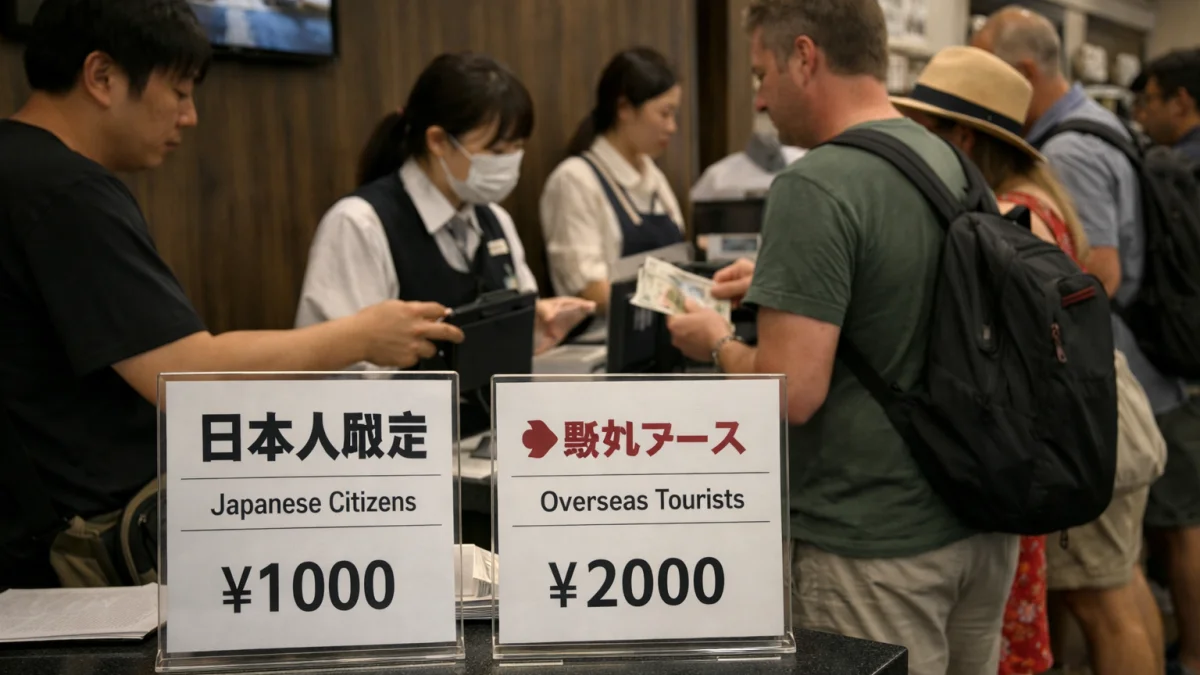
TOKYO — Japan's International Tourist Tax tripled to 3,000 yen per traveler on Wednesday, marking the latest step in a broader shift toward two-tier pricing that charges overseas visitors more than residents across attractions, museums and other tourism services nationwide.
The mandatory departure tax, previously set at 1,000 yen, now applies to all travelers leaving the country by air or sea, part of a government strategy to fund tourism infrastructure and manage the effects of record visitor numbers, according to Japanese tourism authorities. Japan received more than 42.7 million overseas visitors in 2025, a 15.8 percent increase over the previous record, with arrivals in the first quarter of 2026 alone topping 10.6 million, according to tourism data.
The tax increase accompanies a wider expansion of dual pricing at cultural and recreational sites, where non-residents pay higher admission fees than Japanese citizens or residents. Himeji Castle in Hyogo Prefecture, a UNESCO World Heritage site, raised its adult admission fee for non-residents to 2,500 yen in March 2026, a 150 percent increase from the previous flat rate of 1,000 yen, while residency-based pricing kept fees for local residents unchanged. The policy has been cited by Japanese officials and industry analysts as a model for the practice nationally.
The Japan Tourism Agency convened an expert panel in March 2026 to gather input from municipalities and operators that have already adopted differential pricing, with the goal of establishing formal national guidelines by March 2027, according to the agency. A separate effort by Japan's Agency for Cultural Affairs is examining differential pricing at national museums, including the Tokyo National Museum and other institutions in Kyoto and Nara, with a goal of increasing self-generated revenue at those sites from about 55 percent to 65 percent of operating costs by 2031.
A nationwide survey by Loyalty Marketing Inc. found that more than 60 percent of Japanese residents support charging tourists higher prices, reflecting public concern over the strain of overtourism on infrastructure and public services.
Separately, Japan is preparing to end its point-of-sale tax exemption for foreign shoppers starting Nov. 1, 2026, after which non-residents will pay the full price, including consumption tax, and claim refunds only at airport departure points, according to government plans.
The Japan Tourism Agency has not yet released draft national guidelines governing two-tier pricing, which remain under review ahead of the planned 2027 rollout.