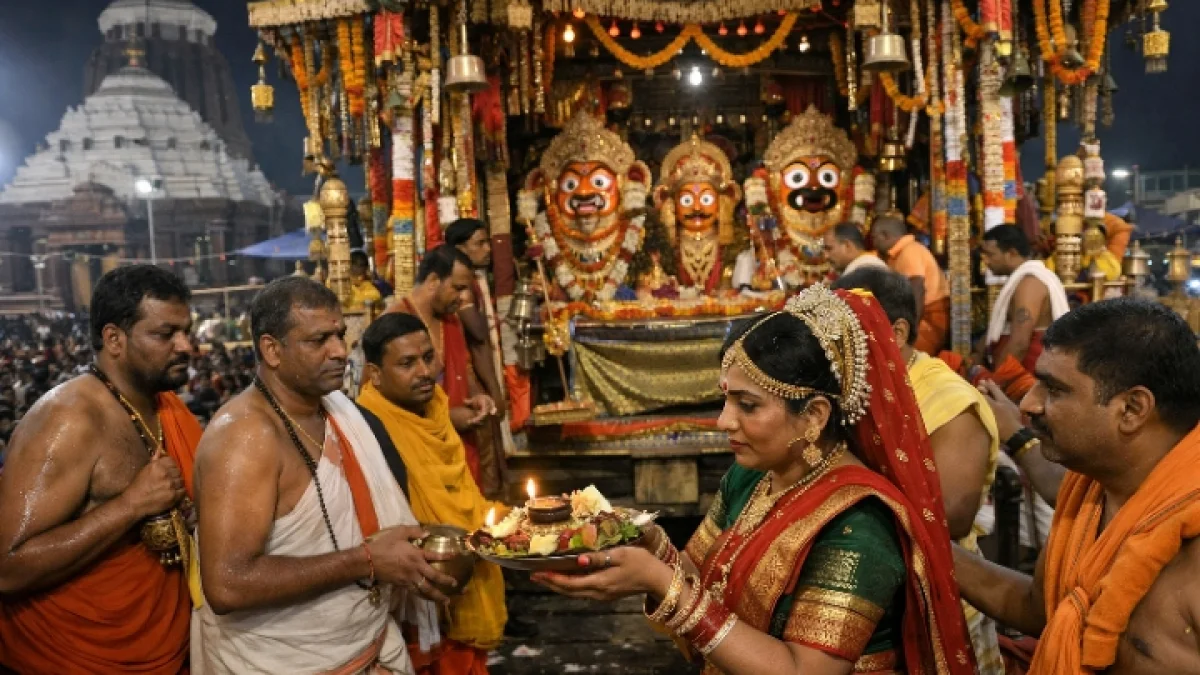
PURI, India—Thousands of devotees gathered in the eastern Indian city of Puri on Monday to observe Hera Panchami, one of the principal rituals of the annual Ratha Jatra festival, as temple authorities conducted traditional ceremonies linked to the journey of Lord Jagannath and his siblings to the Gundicha Temple.
The ritual, held on the fifth day after the deities' ceremonial procession from the Jagannath Temple, centers on Goddess Lakshmi's symbolic visit to the Gundicha Temple in search of Lord Jagannath, according to the temple's long-established religious tradition. Priests carried out the observances in accordance with customary practices while large numbers of pilgrims lined designated routes and temple precincts under security arrangements overseen by local authorities.
Officials said crowd-management measures, traffic diversions and additional police deployment were put in place to facilitate the movement of devotees during the day's events. Odisha authorities have maintained heightened logistical and security preparations throughout this year's Ratha Jatra festival, which attracts pilgrims from across India and abroad.
Hera Panchami is regarded as one of the defining rituals of the festival calendar, depicting the mythological episode in which Goddess Lakshmi visits the Gundicha Temple after Lord Jagannath leaves the main shrine without her. The observance forms part of a sequence of ceremonies that continues until the return journey, known as Bahuda Yatra, when the deities travel back to the Jagannath Temple.
The annual Ratha Jatra began this year with the procession of Lord Jagannath, Lord Balabhadra and Goddess Subhadra on elaborately decorated wooden chariots from the 12th-century Jagannath Temple to the Gundicha Temple. The festival is among India's largest religious gatherings and is recognized for its cultural and spiritual significance in Odisha.
The remaining events of the festival are scheduled to continue later this week, culminating in the Bahuda Yatra, followed by other traditional ceremonies including Suna Besha and Niladri Bije, according to the 2026 ritual calendar observed by temple authorities and the state.