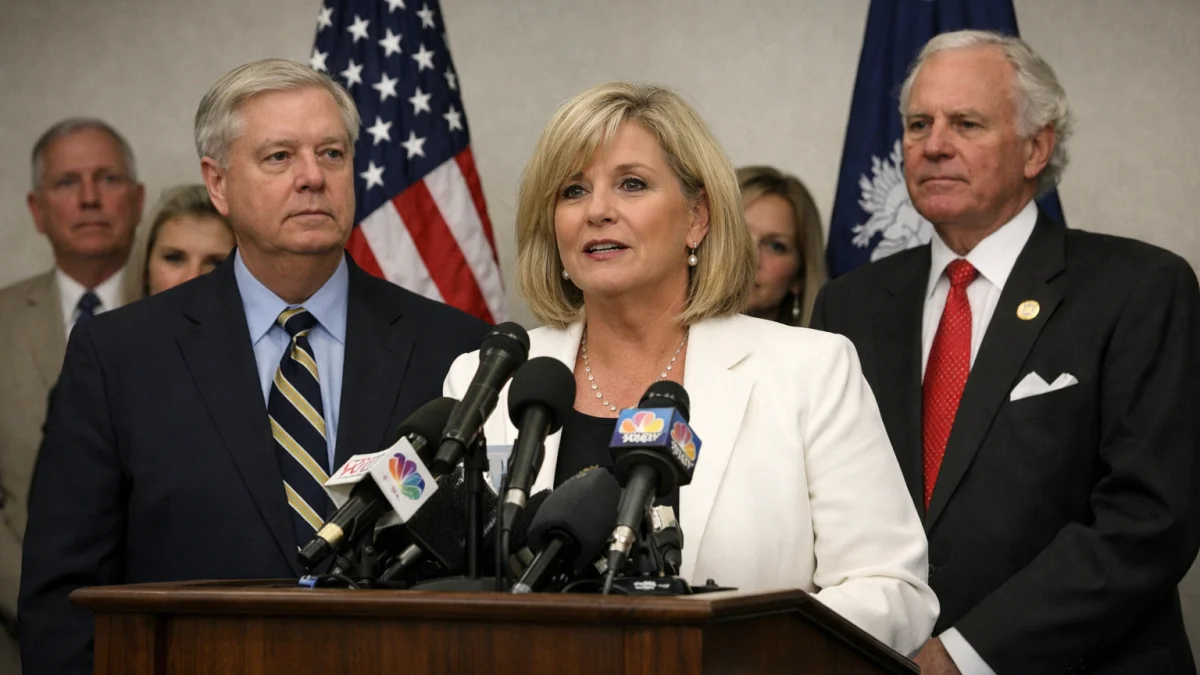
The appointment of Darline Graham, the sister of the late U.S. Senator Lindsey Graham, to temporarily represent South Carolina in the Senate has reshaped the state's succession process by separating the immediate task of filling a vacancy from the increasingly competitive race to determine the state's long-term representation. Governor Henry McMaster's decision, announced days after Graham's sudden death, ensures South Carolina maintains full Senate representation while allowing the Republican Party to conduct a special nomination process ahead of the November general election.
The significance of the appointment lies less in its immediate legislative impact than in how it affects the political dynamics surrounding one of the country's most prominent Republican Senate seats. Lindsey Graham's death ended more than two decades of Senate service and created an unexpected opening in a state where Republicans have maintained a strong electoral advantage. Under South Carolina law, the governor is authorized to appoint a temporary replacement until a successor is elected, while a special Republican primary will determine the party's nominee for the remainder of the upcoming term.
By selecting Darline Graham, who has not previously held elected office but has served in South Carolina public service roles, McMaster chose a caretaker rather than elevating an active contender for the seat. The governor described the appointment as both a legal responsibility and a way to continue Lindsey Graham's work until voters choose a permanent successor. Darline Graham said she intended to carry forward her brother's priorities during the remaining months of the term.
That distinction has important political consequences. Appointing a prominent Republican already considering a Senate campaign could have provided that individual with the advantages of incumbency, fundraising opportunities and increased national visibility before the special primary. By naming someone who is widely viewed as a temporary officeholder, the appointment leaves the Republican nomination contest comparatively open, reducing the possibility that state government itself shapes the outcome of the party's internal competition.
The move also reflects the unusually personal circumstances surrounding Lindsey Graham's political career. After the deaths of their parents during Darline Graham's adolescence, Lindsey Graham became her legal guardian and later adopted her, a relationship that both supporters and officials cited when explaining the appointment. Governor McMaster and President Donald Trump each characterized the selection as a tribute to the late senator's legacy as well as a practical interim solution.
The endorsement from Trump highlights another dimension of the succession process. Graham had become one of Trump's closest congressional allies despite periods of political disagreement earlier in their relationship. Trump's public support for Darline Graham signaled an effort to preserve party unity during a period of transition while avoiding an immediate endorsement of any candidate seeking the longer-term Senate seat. Analysts note that this approach gives prospective Republican candidates an opportunity to compete without one of them entering the race as the appointed incumbent.
South Carolina's succession process also illustrates the balance between gubernatorial appointment powers and electoral accountability. Many U.S. states authorize governors to fill Senate vacancies temporarily to ensure uninterrupted representation in Congress, while requiring voters to select a permanent replacement through a subsequent election. In South Carolina's case, because Graham had already secured the Republican nomination before his death, state law requires a special primary to determine a replacement nominee for the November ballot.
The appointment has nevertheless prompted differing interpretations. Supporters argue that selecting Graham's sister provides continuity during a period of mourning and avoids giving any prospective candidate an institutional advantage before Republican voters make their choice. Critics have questioned whether appointing an immediate family member creates the appearance of political favoritism, even though the appointment is temporary and the permanent officeholder will be chosen through an election. Those competing assessments reflect broader debates about interim appointments rather than disputes over the governor's legal authority.
Operationally, the immediate effect on the Senate is expected to be limited because Darline Graham has pledged to continue supporting the policy priorities associated with her brother's tenure during the remaining months of the term. The more consequential political developments are likely to occur during the Republican special primary, where multiple potential candidates have been mentioned as possible contenders for one of the party's safest Senate seats.
For now, the confirmed picture is clear. South Carolina has restored full representation in the Senate through the governor's temporary appointment, while the state's statutory succession process shifts attention toward the special Republican primary and the November general election that will determine Lindsey Graham's long-term successor. Those elections, candidate filings and official campaign developments remain the principal events being monitored as the succession process continues.