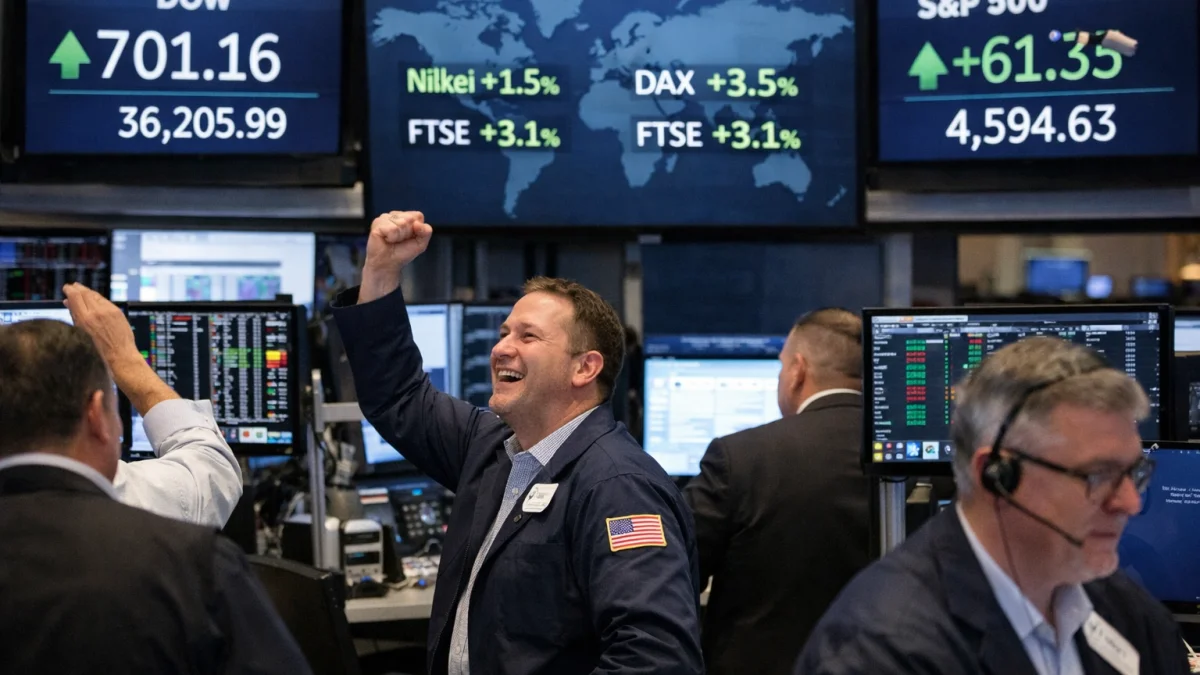
LONDON — Global stock markets posted their strongest weekly gains in about two months on Friday after weaker-than-expected U.S. employment data eased concerns that the Federal Reserve would raise interest rates in the near term, lifting investor sentiment across major equity markets while weighing on the dollar.
MSCI's broadest index of world shares rose about 0.4% on the day and was on track to finish the week roughly 2% higher, its best weekly performance since May. In Europe, the pan-European STOXX 600 climbed around 0.6% to a fresh record high, leaving the benchmark up about 2.6% for the week, according to market data.
The gains followed a U.S. labor market report showing slower-than-expected job creation in June, reinforcing expectations among investors that the Federal Reserve may have less urgency to tighten monetary policy further. The softer employment figures prompted traders to reduce bets on an imminent rate increase, supporting equities while pushing Treasury yields and the U.S. dollar lower. Gold prices also benefited from the shift in interest-rate expectations.
European shares outperformed many U.S. technology-heavy benchmarks, with investors continuing to rotate into sectors viewed as offering more attractive valuations. Market participants said lower exposure to highly valued artificial intelligence-related companies had helped support demand for European equities.
"Yet again, the tech-lite European indices are back in demand," said David Morrison, senior market strategist at Trade Nation, adding that European stocks also traded at lower price-to-earnings valuations than many comparable U.S. companies.
Currency markets reflected the changing policy outlook, with the dollar weakening against a basket of major currencies as investors reassessed the path of U.S. interest rates. Lower expected borrowing costs generally improve the appeal of equities by reducing financing costs for companies and increasing the relative attractiveness of risk assets.
Investors also monitored economic indicators pointing to continued expansion in business activity across several major economies during June, helping reinforce expectations that global growth remains resilient despite higher borrowing costs in recent years.
Attention now turns to the upcoming U.S. corporate earnings season and additional economic data that could influence expectations for Federal Reserve policy. Market participants will also watch comments from central bank officials for further guidance on the outlook for inflation, employment and interest rates in the second half of 2026.