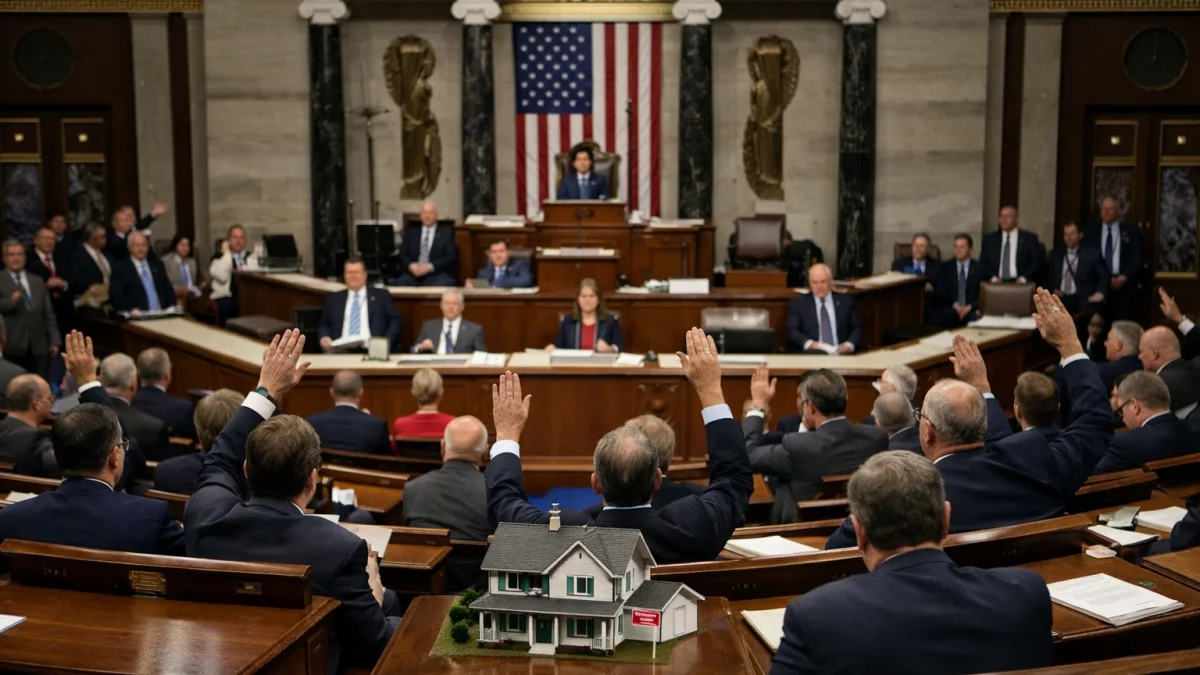
WASHINGTON — The U.S. House of Representatives this week gave final approval to a bipartisan housing package designed to lower housing costs and increase the supply of homes, sending one of the most significant housing measures in decades to President Donald Trump after months of negotiations between lawmakers from both parties.
The legislation, known as the 21st Century ROAD to Housing Act, passed the House by a vote of 358-32 on Tuesday, following Senate approval by an 85-5 vote a day earlier, according to congressional records and lawmakers involved in the negotiations.
Supporters said the measure seeks to address housing affordability by encouraging new residential construction, reducing certain federal regulatory barriers, streamlining environmental reviews and expanding access to financing for housing projects. The bill also includes provisions intended to limit the influence of large institutional investors in the single-family housing market and support alternative housing options, including manufactured and modular homes.
“This bill will help build more homes to meet that growing demand and keep the American dream within reach,” House Financial Services Committee Chairman French Hill, an Arkansas Republican and one of the measure’s chief architects, said during debate on the legislation.
Representative Maxine Waters of California, the committee’s top Democrat, said lawmakers were responding to growing affordability concerns among renters and prospective homebuyers. “Our country must do better and today we will,” Waters said.
The legislation emerged from negotiations that combined dozens of separate housing proposals into a single package. Lawmakers from both parties described the effort as a rare example of bipartisan cooperation in a Congress often marked by partisan disputes.
Housing affordability has remained a major concern across the United States as home prices, borrowing costs and rents have remained elevated in many markets. Industry groups, housing advocates and local government organizations broadly supported the measure, though some analysts cautioned that any impact on prices could take time to materialize.
The bill was initially expected to be signed by Trump this week. However, the White House canceled a planned signing ceremony on Wednesday after Trump said he wanted Congress to act on separate voting legislation before he signed the housing measure. House Speaker Mike Johnson said the president still intends to approve the bill, while under constitutional procedures it could also become law if no action is taken within the prescribed period.
As of Thursday, the housing bill had cleared both chambers of Congress and was awaiting final action from the president.